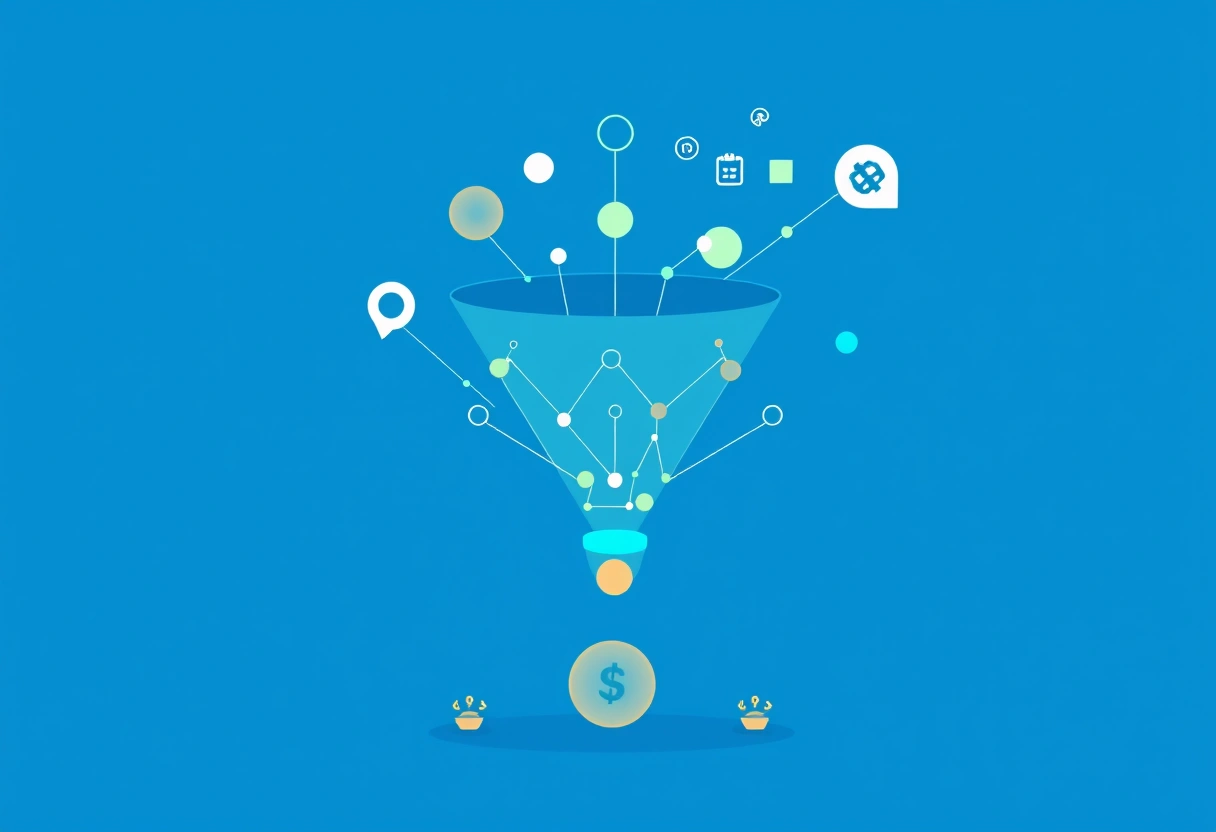
The Foundation: Hyper-Targeting for Maximum ROI
When your budget is tight, scattering your efforts broadly is a mistake. Your first step to generating low cost B2B leads must be deep, precise targeting. This means defining your Ideal Customer Profile (ICP) and developing detailed Buyer Personas.
An ICP isn't just "small businesses"; it specifies company size (e.g., 5-50 employees), industry (e.g., SaaS for dentists), revenue range, and geographic location (e.g., dental practices in Houston, TX). A Buyer Persona goes deeper, outlining job titles (e.g., Office Manager), key challenges (e.g., patient scheduling efficiency), goals (e.g., reducing no-shows), and preferred communication channels.
For example, instead of targeting "all manufacturers," narrow your focus to "mid-sized precision machining shops in the Midwest facing supply chain disruptions." This clarity allows you to craft messages that resonate directly, increasing your conversion rates and reducing wasted effort.
Developing Your ICP and Buyer Personas
Start by analyzing your current best customers. What do they have in common? Interview them about their pain points, how they found you, and what value they get from your solution. This direct feedback is invaluable and free.
Use public data sources like LinkedIn, industry reports, and company websites to gather additional demographic and firmographic information. The more specific you are, the easier it becomes to find and connect with prospects who genuinely need your service.
"Many small businesses think they need a bigger net to catch more fish. In B2B, a smaller, sharper spear aimed at the right target will always yield better results, especially when budget is a constraint. Precision beats volume every time for lead quality."
Here's a simple framework to start defining your ICP:
| Category | Description | Example for a SaaS offering scheduling software |
|---|---|---|
| Industry | Specific sector | Health & Wellness (Dental, Chiropractic, Physical Therapy) |
| Company Size | Employee count or revenue | 1-5 practitioners, $250k-$1M annual revenue |
| Geography | Location focus | Urban/Suburban areas in the US, high-growth cities |
| Pain Points | Challenges they face | High no-show rates, manual scheduling errors, limited online booking |
| Goals | What they want to achieve | Increase patient retention, streamline front-desk operations, reduce administrative burden |
This detailed understanding ensures every lead generation activity, from content creation to direct outreach, is highly relevant and effective. It's the cornerstone of acquiring low cost B2B leads.
Content That Converts, Not Just Creates Noise
You don't need a huge content budget to attract qualified leads. Focus on creating highly specific, problem-solving content that directly addresses your ICP's pain points. This approach generates low cost B2B leads by demonstrating expertise and building trust.
Effective Content Types for Budget Lead Generation
Prioritize content that offers immediate value and acts as a lead magnet. Here are some proven options:
-
Problem-Solving Blog Posts:
Write detailed articles that tackle specific issues your target audience faces. For instance, if you sell cybersecurity, don't write "What is Cybersecurity?" Instead, write "5 Common Ransomware Vulnerabilities for Small Law Firms & How to Fix Them." Make your titles specific and benefit-driven.
-
Simple Case Studies:
One-page success stories showcasing how you helped a client with similar challenges. Include the client's problem, your solution, and quantifiable results (e.g., "reduced churn by 15%," "saved 10 hours/week"). These build immense credibility.
-
Free Templates & Checklists:
Offer downloadable resources like "Social Media Content Calendar Template for B2B Startups" or "Website SEO Audit Checklist for Local Businesses." Gate these behind a simple email capture form to generate leads.
-
Webinars or Workshops:
Host a free 30-45 minute online session on a niche topic. Use platforms like Zoom (free tier for shorter sessions) or Google Meet. Promote it on LinkedIn and relevant groups. This positions you as an expert and allows for direct interaction with potential clients.
Remember to repurpose your content. A webinar can become a blog post, social media snippets, and an email series. This maximizes the return on your content creation efforts without incurring additional costs.
Smart Outreach: Direct & Personalized
Direct outreach remains one of the most effective ways to generate low cost B2B leads, provided it's highly personalized and value-driven. Generic, templated messages are easily ignored. Your goal is to start a conversation, not just make a pitch.
Cold Email Strategies That Work
A well-crafted cold email can yield impressive results. Focus on these elements:
- Hyper-Personalization: Mention something specific about their company, a recent achievement, or a challenge you've observed. "I noticed your recent funding round" or "I saw your article on X and had a thought about Y."
- Clear Value Proposition: Immediately state how you can help them solve a specific problem, based on your ICP research. Keep it concise.
- Specific Call to Action (CTA): Don't ask for a demo in the first email. Ask for a 15-minute chat to explore if there's a fit, or offer a valuable resource. "Would you be open to a quick 10-minute call to discuss how other agencies are tackling this?"
- Follow-Up Sequence: A single email rarely works. Plan a sequence of 3-5 emails, sent over 7-10 days, each adding value or a different perspective. Don't be pushy; be persistent and helpful.
To find verified contact information, you don't always need expensive tools. For local businesses, tools like EasyMapLeads can automate pulling verified contacts like emails and phone numbers directly from Google Maps listings. It also generates AI-powered personalized icebreakers, making your outreach much more effective and saving significant time.
LinkedIn Outreach Best Practices
LinkedIn is a goldmine for B2B leads. Connect with prospects, engage with their content, and participate in relevant industry groups.
- Thoughtful Connection Requests: Instead of the default message, send a personalized note. "Saw your post on X, found it insightful. Would love to connect and learn more about your work at [Company]."
- Engage First: Before sending a direct message, comment on their posts or share their content. Build some familiarity.
- Value-First Messaging: Once connected, don't immediately pitch. Share a relevant article, offer a helpful insight, or ask an open-ended question related to their industry challenges.
Remember, the goal is to build a relationship, not just extract a sale. This approach takes more effort but results in higher quality, more engaged leads.
Community & Niche Platforms: Where Your Buyers Already Are
Your ideal customers are likely congregating in specific online and offline communities. Engaging authentically in these spaces is a powerful, low-cost way to generate B2B leads by building your reputation and offering genuine help.
Online Forums and Social Groups
Seek out specialized forums, Reddit subreddits (e.g., r/smallbusiness, r/marketing), and LinkedIn Groups relevant to your ICP. Don't just promote your service. Participate actively:
- Answer questions thoughtfully, demonstrating your expertise.
- Share valuable resources (your own content or others').
- Engage in discussions without immediately trying to sell.
The aim is to become a trusted voice. When people see your consistent, helpful contributions, they'll naturally look to your profile or website when they need your solution. This organic lead generation is incredibly efficient for low cost B2B leads.
Local Business Associations & Partnerships
Don't overlook local opportunities. Join your Chamber of Commerce or industry-specific associations. Attend virtual or in-person events. Networking doesn't mean handing out business cards; it means having meaningful conversations and exploring how you can help others.
Consider forming referral partnerships with complementary businesses. If you offer web design, partner with a digital marketing agency or a content writer. You refer clients to them, and they refer clients to you. This is a mutually beneficial, zero-cost lead generation strategy.
For instance, if you offer HR software, connect with local accountants who serve small businesses. Their clients often need HR solutions, and the accountant's referral carries significant weight.
Automate & Optimize: Working Smarter, Not Harder
Even on a budget, you can automate repetitive tasks and continuously optimize your lead generation efforts. This frees up your time for higher-value activities and improves your lead quality over time.
Utilize Free CRM and Marketing Automation Tools
Many robust tools offer free tiers that are perfect for small businesses:
- CRM: HubSpot CRM Free, Zoho CRM Free, or Monday.com (basic plans). These help you track interactions, manage pipelines, and remember follow-ups.
- Email Marketing: Mailchimp (free up to 500 contacts), ConvertKit (free up to 1,000 subscribers). Use these for sending newsletters, distributing gated content, and setting up simple automated email sequences.
- Scheduling Tools: Calendly (free basic plan), Acuity Scheduling (free trial). Allow prospects to book meetings directly into your calendar, reducing back-and-forth emails.
These tools, even in their free versions, provide the infrastructure to manage your leads effectively and ensure no opportunity falls through the cracks. They enable you to scale your efforts without scaling your costs, making them essential for generating low cost B2B leads.
Track, Test, and Refine
Lead generation is an iterative process. You must track what's working and what isn't, then adjust your approach.
For cold email campaigns, monitor open rates, click-through rates, and reply rates. If your open rates are low, test different subject lines. If reply rates are low, refine your body copy and call to action.
A/B test different versions of your LinkedIn connection messages or your website's lead magnet offers. Even small improvements can significantly impact your lead volume and quality over time. Focus on one metric at a time to keep it manageable. For example, aim to increase your cold email reply rate by 5% this month.
Frequently Asked Questions
How long does it take to see results from budget B2B lead generation strategies?
You can often see initial responses from direct outreach (cold email, LinkedIn) within a few days to a few weeks. Content marketing and community building typically require 3-6 months of consistent effort to generate steady organic leads.
What's the most effective free tool for B2B lead generation?
LinkedIn is arguably the most powerful free tool for B2B lead generation due to its extensive professional network and robust search filters. Using it strategically for prospecting, engagement, and content sharing yields significant value.
Should small businesses focus on quantity or quality of leads?
Small B2B businesses, especially on a budget, should always prioritize lead quality over quantity. Focusing on highly qualified leads who genuinely fit your ICP saves time, reduces wasted effort, and leads to higher conversion rates and better client relationships.
Is cold outreach still effective for B2B leads?
Yes, cold outreach remains highly effective for B2B leads when executed with precision and personalization. Generic, untargeted messages are ignored, but a well-researched, value-driven email or LinkedIn message can open doors to new opportunities.